





ARCHIBLOG: An Experimental Practice

|

|

|

|

|
This article develops through a documentary and reflective account of how the practice has evolved:
- Origins: the beginnings in 1967, and the encounter with Cedric Price and anticipatory design.
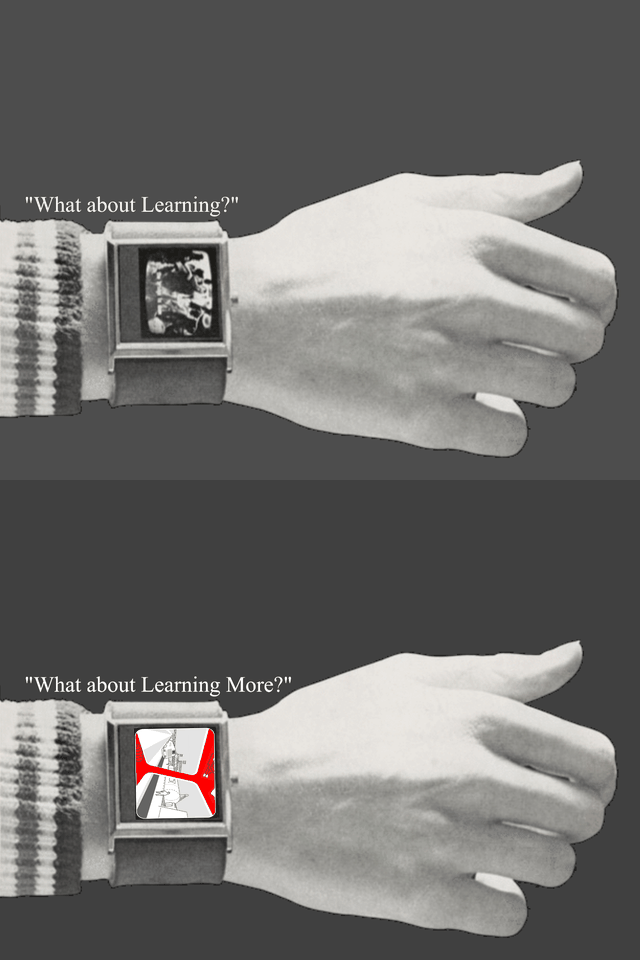
- Experiments: Edukit, Domestikit, Atom and the Dukeries Thinkbelt.
- Methods: research, documentation, cataloguing, mapping, digital media and the commons.
- Continuity: the relationship between historical investigation and contemporary architectural aspirations.
- Present undertaking: Archiblog as an ongoing, self-sponsored experimental practice.
Contents |
[edit] Origins: 1967, Cedric Price and anticipatory design
|
In August 1967, I was given a copy of Architectural Design, October 1966 (AD/10/66). When I returned to college in September, I began reading the issue, which included Cedric Price's Potteries Thinkbelt (PTb). This encounter marked the beginning of an investigation into architecture that has continued, in changing forms, ever since. The Potteries Thinkbelt was not an isolated proposition. Its antecedents can be traced to Price's earlier work, particularly the Fun Palace, and to a wider intellectual and technological context in which the relationship between architecture, education, information and social change was being reconsidered. The Fun Palace deserves particular recognition in this respect. Conceived by Price in collaboration with Joan Littlewood, it represented a pioneering attempt to imagine an indeterminate architecture: an environment in which activities, arrangements and spatial configurations would not be permanently prescribed, but could respond to changing circumstances and the requirements of its users. Indeterminacy was not an absence of architectural intention, but an intention to accommodate change and unforeseen possibilities. The significance of the Fun Palace therefore extends beyond its particular programme or proposed form. It introduced a conception of architecture as an enabling and changing infrastructure. This conception can be considered alongside the work of Buckminster Fuller, whose Education Automation, published in 1962, addressed the possibilities of reorganising education through technological and information systems. Although written in a United States context, Fuller's recommendations are pertinent to the wider questions raised by the Fun Palace and subsequently by the Potteries Thinkbelt. In particular, Fuller's discussion of mobile structures, geographical distribution, helicopter transportation and computer networks suggests an educational infrastructure operating at a scale beyond that of conventional educational institutions. He describes the transportation of large geodesic domes by helicopter, considers the provision of geographical bases and mobility, and advocates a comprehensive computer installation with network connections for processing the documentary material generated by educational research. Fuller's concluding exhortation to prepare for technological possibilities that might previously have seemed impractical provides a characteristic expression of his anticipatory thinking. These recommendations do not, in themselves, establish a direct line of influence on Price. They do, however, provide a valuable contemporary context in which to examine the emergence of new conceptions of educational and architectural infrastructure. Medikit, by Dugdale, Busfield and Conway (1969), is another important part of this early documentary territory. Alongside the Fun Palace and Potteries Thinkbelt, it extends the investigation beyond education to questions of health, services and the organisation of resources. Taken together, these projects suggest an architectural interest extending beyond the design of individual buildings towards the systems, facilities and relationships through which social activities might be supported. The relationship between the Fun Palace and Potteries Thinkbelt is significant. The latter can be understood as more than a new application of an earlier architectural idea. It developed questions concerning indeterminacy, infrastructure and change within a particular geographical and industrial context. In this respect, the Thinkbelt provides an opportunity to investigate how architectural intentions might be translated into a territorial system involving movement, communication, education and the redistribution of resources |
The subsequent history of the Thinkbelt raises a further question concerning the acknowledgement of its original conception. In Non-Plan, published in 1969, Price suggested a "Possible Thinkbelt in old industrial net between Nottingham and Sheffield". In 1982, when I wrote to Price to ask whether he had any objection to my undertaking a Thinkbelt study in the Dukeries, he replied that he had none, provided that due acknowledgement was given to the original conception. I understand this reference to the original conception as relating to the Fun Palace rather than to the Potteries Thinkbelt itself. Reyner Banham's article, Cycles of the Price-mechanism, published in AA Files in June 1984, provides a valuable perspective on this interpretation. Although Banham does not discuss the Potteries Thinkbelt, his examination of Price's work, including the Fun Palace, draws attention to the relationship between permanent architectural frameworks and changing activities, the concept of operational time, and the capacity of facilities to respond to changing requirements. His discussion offers a means of examining the architectural principles associated with the Fun Palace and how they might be interpreted in another territory.It is against this background that my encounter with the Potteries Thinkbelt in September 1967 acquires its significance. My subsequent investigation was not simply an attempt to understand a particular architectural proposal, nor to reproduce the work of Cedric Price. It became an exploration of the possibilities opened up by the ideas encountered there, and of the extent to which they might be developed, questioned and applied in other circumstances. Anticipatory design became an important part of my investigation through Price's observation, published in AJ in September 1996, that "architecture is slow and therefore requires anticipatory design". An earlier observation, recorded in Works II in 1984, is equally suggestive: "Instantaneous architectural response to a particular problem is too slow." Taken together, these statements draw attention to the limitations of reactive architectural practice. They suggest that architecture must engage with circumstances that are still emerging, and with changes that may occur over periods considerably longer than those involved in conventional architectural production. Fuller's technological optimism and Price's architectural propositions offer different approaches to anticipating the future. In Education Automation, Fuller placed considerable confidence in technological development and the organisation of resources to accommodate anticipated requirements. His approach was, in this respect, relatively mechanistic, emphasising the capacity of technological and organisational systems to provide for future needs. Price's observations suggest a less determinate approach, in which the capacity to accommodate change and unforeseen circumstances becomes more significant than the provision of predetermined responses. This distinction raises a question that has remained central to my investigation: whether architecture is better understood as an activity of enabling and anticipating possibilities than as one of responding to and solving particular problems. The experimental practice documented through ARCHIBLOG can therefore be traced to an encounter in 1967, but its intellectual and architectural antecedents extend further back. The Fun Palace, Medikit, Potteries Thinkbelt and Fuller's proposals for educational automation provide some of the early reference points. Their relationships, differences and implications have continued to inform an investigation into what architecture might be doing, and what it might yet become. [edit] References |
[edit] Experiments: Edukit, Domestikit, Atom and the Dukeries Thinkbelt.
| Edukit, Domestikit, Atom and the Dukeries Thinkbelt. |
[edit] Methods
research, documentation, cataloguing, mapping, digital media and the commons.
[edit] Continuity
the relationship between historical investigation and contemporary architectural aspirations.
[edit] Present undertaking

|

|

|

|
|
|||
|
|
|||
|
|
|||
|
|
|||
|
|
• Archiblog as an ongoing, self-sponsored experimental practice.
--Norman Fellows 11:35, 30 Oct 2026 (BST)
Featured articles
Check out some of the best features and news from Designing Buildings as well as key stories from around the web.
ECA responds to the Milburn Report

Youth employment to be linked to workforce demand.
The construction industry urgently needs to attract new talent
CIOB responds to Neets report.
Grenfell Tower community update
Memorial columns to be retained as careful dismantling continues.
When buildings reflected the local resources available.

CIOB reports 57% are using artificial intelligence technologies.

More of England’s ‘hidden heroes’ will be celebrated.

CIAT calls for retrofit to be a priority.

Version 6 is now available, along with guidance for ECA members.
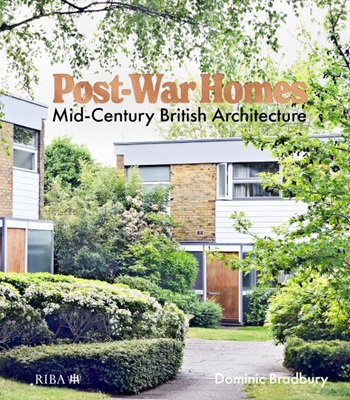
Post-War Homes: mid-century British architecture. Book review.

CIAT reflects on the party conferences.
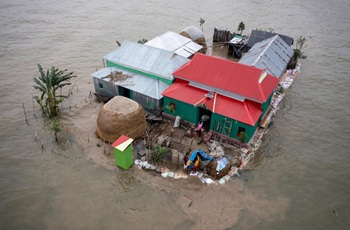
CIOB announce the winners of the Art of Building photography competition.

National Scheme of Delegation introduced.